
 Written By: Hesam Seyedi | November 28, 2025
Opening an MRI report can be unsettling.
The words sound precise and serious, yet it is often hard to tell what they actually mean for your health.
Many MRI reports are written for medical professionals, not patients. That gap in language can leave you feeling confused, anxious, or unsure whether something important is being overlooked.
This article explains how to read MRI results in clear, plain language. You will learn how to understand common terms, recognize what is usually routine, and know when it makes sense to ask for more explanation or another review.
Even when MRI findings are routine, the way they are written can make them hard to understand. Many reports use long sentences and medical terms that are not part of everyday language.
This creates a gap between what the report says and what a patient can reasonably understand. The issue is not the patient’s ability to read, but the level at which the report is written.
Research highlighted by radiology organizations shows that most lumbar spine MRI reports are written at a reading level that is too advanced for the average patient to comprehend. This helps explain why many people feel lost after reading their results.
When reports are difficult to read, important reassurance can be missed and anxiety can grow. Understanding this mismatch is key to learning how to interpret MRI results more calmly and accurately.


Many people assume they should understand their MRI report once they read it carefully.
In reality, even patients who take time to review their results often feel unsure about what the findings truly mean.
This uncertainty is common, especially with spine and joint imaging where reports include detailed descriptions of anatomy and changes that may or may not be related to symptoms.
In a recent study focused on spine MRI reports, patients rated their understanding of the original radiology report at an average of 6.56 out of 10. This score reflects a real gap between reading the report and fully understanding it.
When understanding feels incomplete, worry can fill in the gaps. This is why clear explanations and plain language play such an important role in helping patients feel informed rather than overwhelmed.
When medical language is simplified, many patients feel immediate relief. Clear explanations help turn unfamiliar terms into information that actually makes sense.
Plain-language summaries work because they focus on meaning rather than technical detail. Instead of listing every observation, they explain what a finding usually means and whether it is common, expected, or worth discussing further.
Evidence supports this approach. In studies reviewed on patient experiences with imaging reports, 77 percent of participants said a comprehension aid helped them understand their imaging report better compared with reading the standard report alone.
Better understanding does not just improve knowledge. It also helps patients feel calmer and more prepared for conversations about next steps.
Not all MRI reports cause the same level of confusion.
Patients tend to understand their results better when reports include simple explanations instead of only technical descriptions.
Clear definitions, brief summaries, and visual cues can make a big difference. These tools help patients see how a finding fits into the bigger picture, rather than focusing on isolated medical terms.
Studies on patient-friendly radiology reports show strong support for this approach. In one study, 84.7 percent of patients said added definitions and diagrams helped them understand their report, and 86.7 percent supported the patient-friendly report format.
When reports are easier to follow, patients feel more informed and less anxious. This kind of clarity helps shift the focus from fear to understanding.
New tools are being developed to help patients better understand MRI reports. These tools focus on translating technical language into clear explanations without changing the original medical findings.
One approach uses plain-language summaries to explain what each finding usually means and how it may relate to symptoms. This can help patients feel more confident when reviewing their results.
In a study focused on spine MRI reports, patients who received a plain-language interpretation showed improved understanding. Their average comprehension score increased from 6.56 to 8.50 out of 10, along with higher satisfaction compared with the original report.
These findings suggest that clearer explanations can make a meaningful difference, especially for patients reading their MRI results on their own.
Many people now see their MRI results before they have a chance to speak with a doctor. While quick access can feel empowering, reading a report alone can also raise new concerns.
Without context or explanation, unfamiliar terms can lead to worry. Patients may focus on certain phrases and assume the worst, even when findings are routine or expected.
Research on patient access to test results highlights this risk. In a large survey, 17.5 percent of patients with non-normal imaging results reported feeling more worried after reading their results, compared with 5.8 percent of those with normal findings.
This does not mean patients should avoid reading their reports. It shows why clear explanations and follow-up conversations are so important when reviewing MRI results.
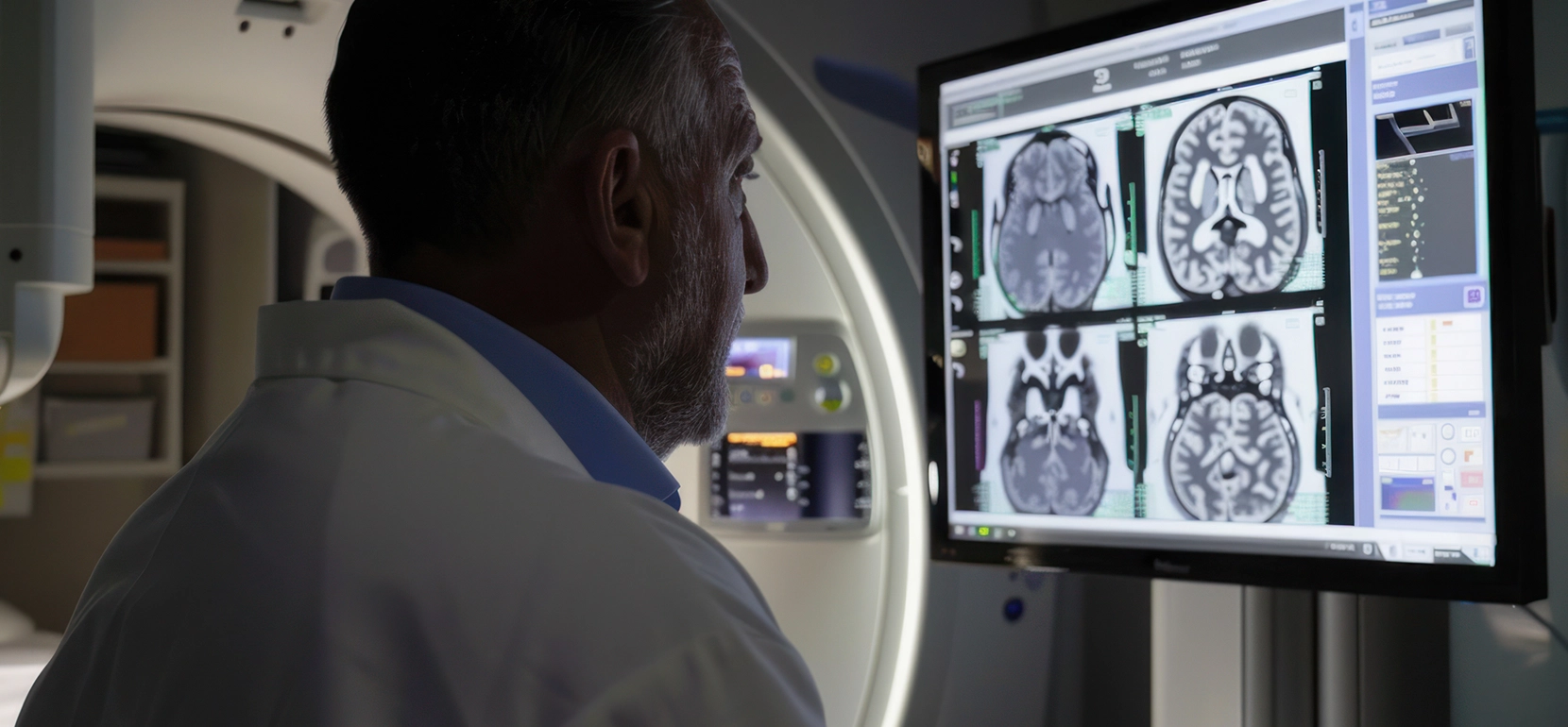
Many patients appreciate being able to view their MRI images along with the written report. Seeing the images can make the results feel more concrete and personal.
At the same time, MRI images are complex. Without training, it can be difficult to know which findings are important and which are normal variations.
Studies on patient access to radiology images show this balance clearly. Patients often value seeing their own scans, but still report needing professional explanation to understand what the findings mean and what steps to take next. This was highlighted in research on patient experiences after viewing radiology images online.
Images can support understanding, but they work best when paired with clear explanations. Knowing when to seek help interpreting what you see can prevent confusion and unnecessary worry.
MRI scans provide detailed images, but they are not perfect.
Like any test, an MRI shows what can be seen at a specific moment and from certain angles.
Some findings can be subtle, early, or difficult to interpret. In other cases, changes may be present but not clearly linked to symptoms. This is why a report that sounds reassuring does not always answer every question.
Many patients wonder whether imaging can miss important findings. Understanding when and how this can happen is part of learning how to read MRI results realistically. This concern is explained in more detail in our guide on can an MRI miss a tumor.
Recognizing the limits of imaging does not mean assuming something was missed. It means knowing when it is reasonable to ask for more explanation or another review if symptoms and reports do not seem to match.
There are times when an MRI report still leaves questions, even after you have read it carefully. This can happen when symptoms continue, when findings feel unclear, or when the language in the report does not fully explain what is going on.
Getting a second opinion on an MRI is not about distrusting your care team. It is a common and reasonable step when you want clarity, reassurance, or a deeper explanation of complex findings.
In Canada, patients have the right to request copies of their imaging reports and images from hospitals or clinics. This makes it possible to have another specialist review the scan and explain the findings in more detail.
If you are unsure how to start this process, our guide on How to Get a Second Opinion on an MRI walks through the steps and what to expect.
A second review can help confirm what is reassuring, clarify what needs follow-up, and support more confident decisions about next steps.
After reading your MRI report, it can help to pause and focus on what you can do next. Taking a few simple steps can bring clarity and reduce uncertainty.
Ask the imaging clinic or hospital for a copy of your full report and your MRI images. These are often provided as a digital link or on a disc, and having them gives you more control over your care.
As you review the report, highlight any terms or phrases you do not understand. Write down questions such as, “How does this finding affect my daily life?” or “Is this related to my symptoms?”
Before your next appointment, list your top three concerns. Bringing clear questions to the conversation can help you stay focused and make better use of your time with a doctor.
If you still feel unsure after reviewing the report and discussing it, learning how to talk to your doctor about a second opinion can be a helpful next step toward clarity.
MRI reports can feel intimidating, especially when the language is unfamiliar. Confusion does not mean something is wrong. It means the information has not been explained in a way that makes sense yet.
Learning how to read MRI results helps you move from uncertainty to understanding. When you know what common terms mean and what usually matters, it becomes easier to ask questions and take part in decisions about your care.
You do not have to figure everything out on your own. Seeking clearer explanations or another review is a reasonable step when results and symptoms do not line up or when peace of mind is still missing.
MRI reports are written for doctors and radiologists, not patients. They use precise medical language to describe findings, which can feel confusing or alarming without explanation.
No. Many MRI findings describe common or age-related changes that are not dangerous. An abnormal finding simply means something looks different from what is typical, not that it is harmful.
In radiology, “unremarkable” means no abnormal findings were seen. It is a reassuring term, even though it can sound concerning at first.
An incidental finding is something noticed on the scan that was not related to the reason the MRI was ordered. These findings are often harmless, but they may need follow-up depending on the situation.
Many people choose to read their report first, but it can raise questions or worry without context. If something feels unclear, it is best to discuss the report with a doctor who can explain what the findings mean for you.
MRI scans are powerful tools, but no test is perfect. Some findings can be subtle or hard to detect, which is why symptoms and clinical history are always important alongside imaging.
A second opinion can help when symptoms continue, when the report feels unclear, or when you want reassurance that nothing important was overlooked.
Yes. In Canada, patients can request copies of their MRI report and images from the clinic or hospital where the scan was performed.
| Cookie | Duration | Description |
|---|---|---|
| cookielawinfo-checkbox-advertisement | 1 year | Set by the GDPR Cookie Consent plugin, this cookie is used to record the user consent for the cookies in the "Advertisement" category . |
| cookielawinfo-checkbox-analytics | 11 months | This cookie is set by GDPR Cookie Consent plugin. The cookie is used to store the user consent for the cookies in the category "Analytics". |
| cookielawinfo-checkbox-functional | 11 months | The cookie is set by GDPR cookie consent to record the user consent for the cookies in the category "Functional". |
| cookielawinfo-checkbox-necessary | 11 months | This cookie is set by GDPR Cookie Consent plugin. The cookies is used to store the user consent for the cookies in the category "Necessary". |
| cookielawinfo-checkbox-others | 11 months | This cookie is set by GDPR Cookie Consent plugin. The cookie is used to store the user consent for the cookies in the category "Other. |
| cookielawinfo-checkbox-performance | 11 months | This cookie is set by GDPR Cookie Consent plugin. The cookie is used to store the user consent for the cookies in the category "Performance". |
| viewed_cookie_policy | 11 months | The cookie is set by the GDPR Cookie Consent plugin and is used to store whether or not user has consented to the use of cookies. It does not store any personal data. |
| Cookie | Duration | Description |
|---|---|---|
| _ga | 2 years | The _ga cookie, installed by Google Analytics, calculates visitor, session and campaign data and also keeps track of site usage for the site's analytics report. The cookie stores information anonymously and assigns a randomly generated number to recognize unique visitors. |
| _ga_530K1V7VWR | 2 years | This cookie is installed by Google Analytics. |
| Cookie | Duration | Description |
|---|---|---|
| nitroCachedPage | session | No description |