
 Written By: Hesam Seyedi | November 7, 2025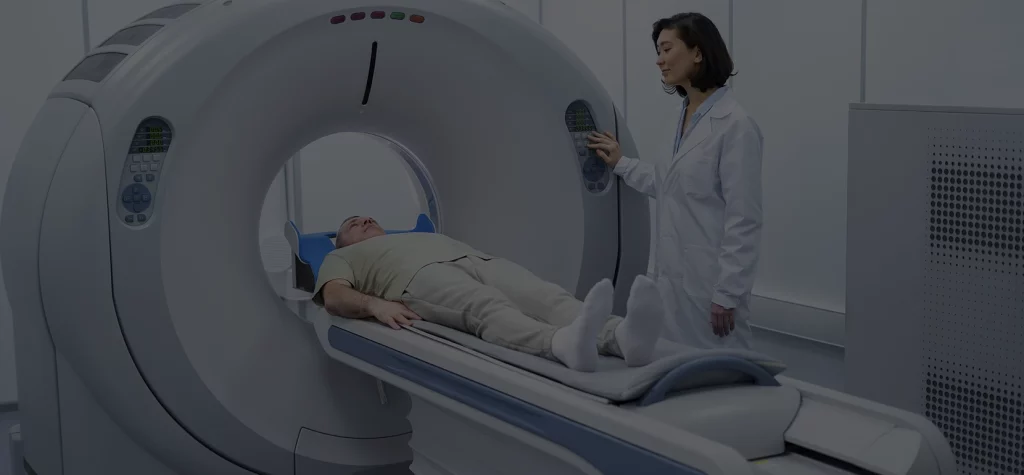
When your doctor says you need imaging, it’s natural to wonder which scan will give you the clearest answers. Ultrasound and CT scans look inside your body in very different ways, and each one has strengths that make it the right choice in certain moments.
Ultrasound uses sound waves. CT uses advanced X-ray imaging. One is ideal for real-time views of soft tissues and blood flow. The other captures detailed cross-sectional images that help doctors spot deeper or more complex problems.
If you’re unsure which scan is right for you, this guide breaks down accuracy, safety, and the conditions each test diagnoses best—so you can feel confident in the path ahead.
Both ultrasound and CT scans can help uncover what’s causing your symptoms—but they don’t see your body the same way. CT scans tend to capture deeper detail, while ultrasound offers strong accuracy for many soft-tissue and surface-level conditions.
For conditions like appendicitis or diverticulitis, CT scans often provide more precise answers, with sensitivity rates reaching 94% for appendicitis and 81% for diverticulitis. Ultrasound still performs well—especially when used early or by experienced clinicians—but its sensitivity can be lower. Interestingly, both tests show similar accuracy for gallbladder issues, each around 73%.
For kidney stones, the difference is surprisingly small. A large review of over 2,700 patients found that ultrasound and CT scans led to the same health outcomes—with no major differences in pain, complications, or hospital returns.
When looking at overall reliability, ultrasound accuracy ranges between 71% and 97%, while CT scans typically fall between 93% and 98% for many urgent or complex conditions. This difference is why CT is often chosen when doctors need a deeper or more detailed view.
If your imaging results leave you with lingering questions, you can explore how follow-up reviews work through how to get a second opinion on an MRI. Sometimes clarity comes from a fresh set of expert eyes.
The takeaway? Ultrasound is highly reliable for many targeted exams, while CT delivers more detail when deeper structures or urgent conditions are involved.


One of the biggest differences between these two scans is how they interact with your body. Ultrasound uses harmless sound waves, which means there’s no radiation at all—making it a preferred choice for pregnant women, children, and anyone who needs repeated imaging.
CT scans, on the other hand, rely on X-rays to produce detailed cross-sectional images. While the radiation dose is small, it does add up over time. That’s why many clinicians weigh the benefit of detail against long-term exposure, especially for younger patients or those who need multiple follow-ups.
For a clear breakdown, ultrasound is considered the safer option overall due to the complete absence of ionizing radiation, while CT is used when the diagnostic value outweighs the small added risk.
If radiation is a concern for you or a family member, ask whether ultrasound can answer the question first. When the situation is urgent or unclear, CT may still be the clearer path.
Ultrasound and CT scans don’t just differ in accuracy—they capture the body in completely different ways. CT scans create highly detailed, three-dimensional cross-sections, giving doctors a clear view of deep organs, bones, blood vessels, and complex structures all at once.
Because of this detail, CT scans excel at detecting small tumors, fractures, internal bleeding, and vascular problems—the kinds of issues that may not show up on an ultrasound.
Ultrasound shines in a different way. Its real-time imaging makes it ideal for seeing movement inside the body, such as blood flow, organ motion, or a baby’s heartbeat. It’s also a go-to tool during procedures like biopsies.
For this reason, ultrasound is often used for vascular studies, obstetrics, superficial tissues, and dynamic assessments, even though it can’t match CT’s spatial detail for deeper or more complex areas.
In short: ultrasound shows how things move. CT shows exactly where things are—and what might be damaged.
Different scans answer different questions, and doctors choose the one that matches the urgency and complexity of your symptoms. Ultrasound is often the first stop for many routine or surface-level concerns because it’s quick, safe, and effective for soft tissues.
It’s commonly used for pregnancy scans, abdominal screenings, vascular studies, and pediatric imaging—situations where real-time movement matters or where avoiding radiation is important.
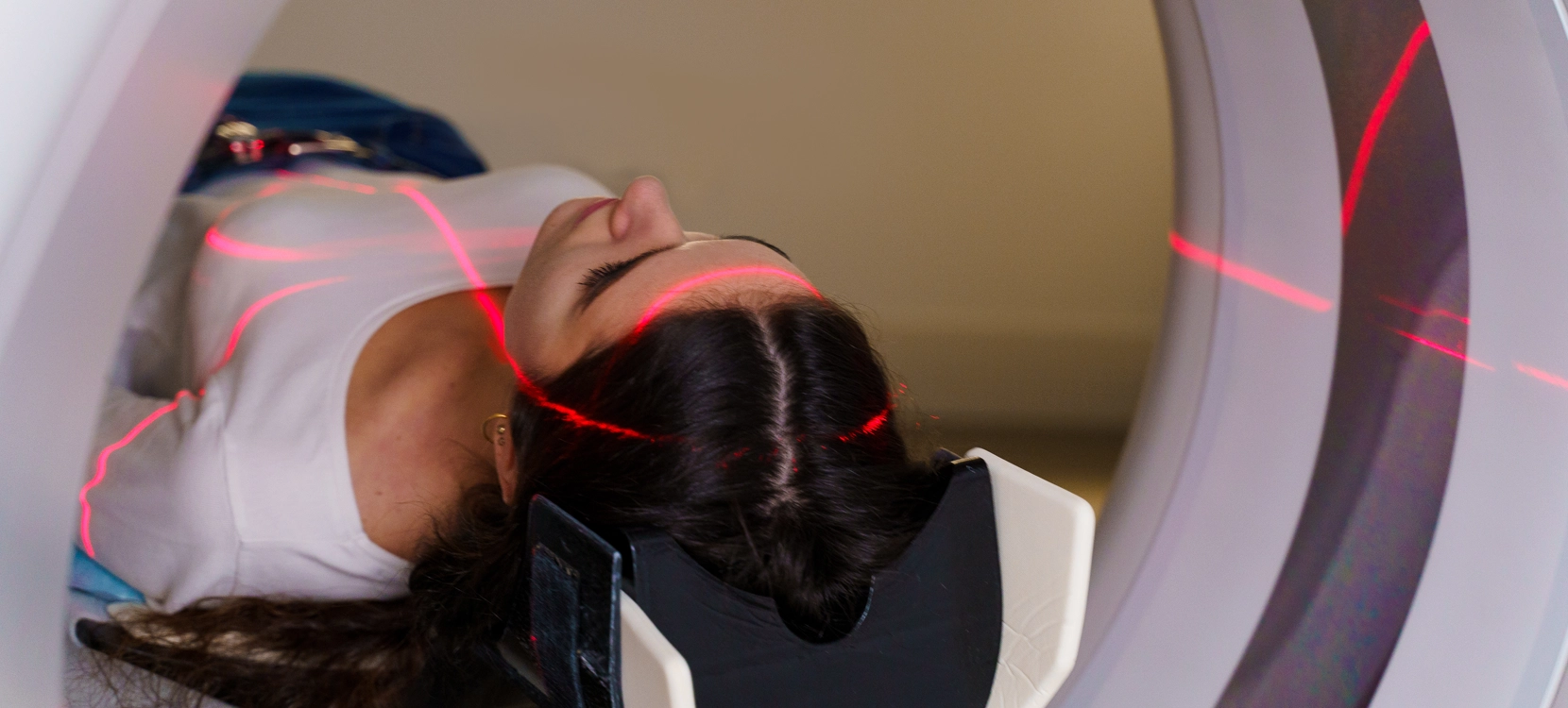
CT scans step in when doctors need a deeper or more detailed look. They’re often used for trauma cases, internal injuries, cancer staging, and hard-to-detect issues like tiny tumors or complex organ problems.
In fact, evidence shows that ultrasound is not as effective as CT in assessing certain types of trauma, which is why emergency departments often rely on CT for rapid decision-making.
Think of it this way: ultrasound is ideal for clear, focused questions. CT is for when the picture needs to be broader, deeper, or more precise.
In Canada, most medically necessary imaging is covered through provincial health plans, which means the choice between an ultrasound and a CT scan usually isn’t about cost—it’s about access and timing.
Ultrasound tends to be more accessible because it requires simpler equipment, less setup, and shorter appointment times. Many clinics and hospitals can offer it on the same day or within a short timeframe.
CT scans, on the other hand, depend on specialized technology and dedicated imaging suites. This can make wait times longer, especially in busy hospitals or regions with limited machines.
For context, ultrasound is generally more accessible due to its simpler technology and faster workflow, while CT is relied on when cases require more detailed, comprehensive images.
If your situation isn’t urgent, ultrasound may be the quicker first step. If your doctor needs answers fast—or suspects something deeper—a CT scan may still be the faster path to a diagnosis.
Both ultrasound and CT scans play major roles in modern diagnostics, but they’re used differently depending on the setting and the urgency. Hospitals often rely on ultrasound as the first-line test because it’s safe, fast, and widely available. CT comes into play when more detail is needed or when time is critical.
Recent data highlights just how essential both tests are. In the UK, roughly 810,000 ultrasounds and more than 520,000 CT scans were performed during a single reporting period, reflecting the widespread reliance on both tools.
While CT scan use has grown due to its unmatched detail, ultrasound remains a cornerstone of routine care—especially in emergency rooms, maternity units, and clinics where rapid, radiation-free imaging is needed.
Overall, the trend is clear: medicine isn’t choosing one over the other. Instead, doctors are choosing the right scan for the right moment.
If you’re still unsure which scan is right for your situation, it often comes down to one question: what is your doctor trying to find? Ultrasound is excellent for soft tissue, movement, and surface-level concerns. CT is ideal when deeper structures, internal bleeding, or complex problems need a closer look.
Start by asking your doctor what they hope the scan will show. If radiation is a concern—especially for children, pregnant patients, or anyone needing multiple tests—ask whether an ultrasound can answer the question first. If your symptoms are urgent or unclear, CT may give the more definitive picture.
If you want guidance before or after getting your scan, you can connect with a medical specialist through 2MDOpinion’s Canadian specialist search portal. You’ll find experts across multiple fields who can help explain your imaging results or confirm your next steps.
And if you’re wondering whether your situation calls for another expert’s perspective, this guide explains when to seek a second medical opinion and how to time it well.
Both ultrasound and CT can provide life-saving information. The right one depends on your body, your symptoms, and the kind of clarity you need right now.
| Cookie | Duration | Description |
|---|---|---|
| cookielawinfo-checkbox-advertisement | 1 year | Set by the GDPR Cookie Consent plugin, this cookie is used to record the user consent for the cookies in the "Advertisement" category . |
| cookielawinfo-checkbox-analytics | 11 months | This cookie is set by GDPR Cookie Consent plugin. The cookie is used to store the user consent for the cookies in the category "Analytics". |
| cookielawinfo-checkbox-functional | 11 months | The cookie is set by GDPR cookie consent to record the user consent for the cookies in the category "Functional". |
| cookielawinfo-checkbox-necessary | 11 months | This cookie is set by GDPR Cookie Consent plugin. The cookies is used to store the user consent for the cookies in the category "Necessary". |
| cookielawinfo-checkbox-others | 11 months | This cookie is set by GDPR Cookie Consent plugin. The cookie is used to store the user consent for the cookies in the category "Other. |
| cookielawinfo-checkbox-performance | 11 months | This cookie is set by GDPR Cookie Consent plugin. The cookie is used to store the user consent for the cookies in the category "Performance". |
| viewed_cookie_policy | 11 months | The cookie is set by the GDPR Cookie Consent plugin and is used to store whether or not user has consented to the use of cookies. It does not store any personal data. |
| Cookie | Duration | Description |
|---|---|---|
| _ga | 2 years | The _ga cookie, installed by Google Analytics, calculates visitor, session and campaign data and also keeps track of site usage for the site's analytics report. The cookie stores information anonymously and assigns a randomly generated number to recognize unique visitors. |
| _ga_530K1V7VWR | 2 years | This cookie is installed by Google Analytics. |
| Cookie | Duration | Description |
|---|---|---|
| nitroCachedPage | session | No description |